

Health•Wellness
Cold vs Allergy: A Family Friendly Cheat Sheet for Sniffly Season
22 Aug '25
6 min read
Stuffy and runny noses come for us all. But if you have been near a coughing coworker and your friend’s moulting cat, it can be hard to tell: are you actually sick, or just battling allergies? Here’s how to figure out what’s actually going on.
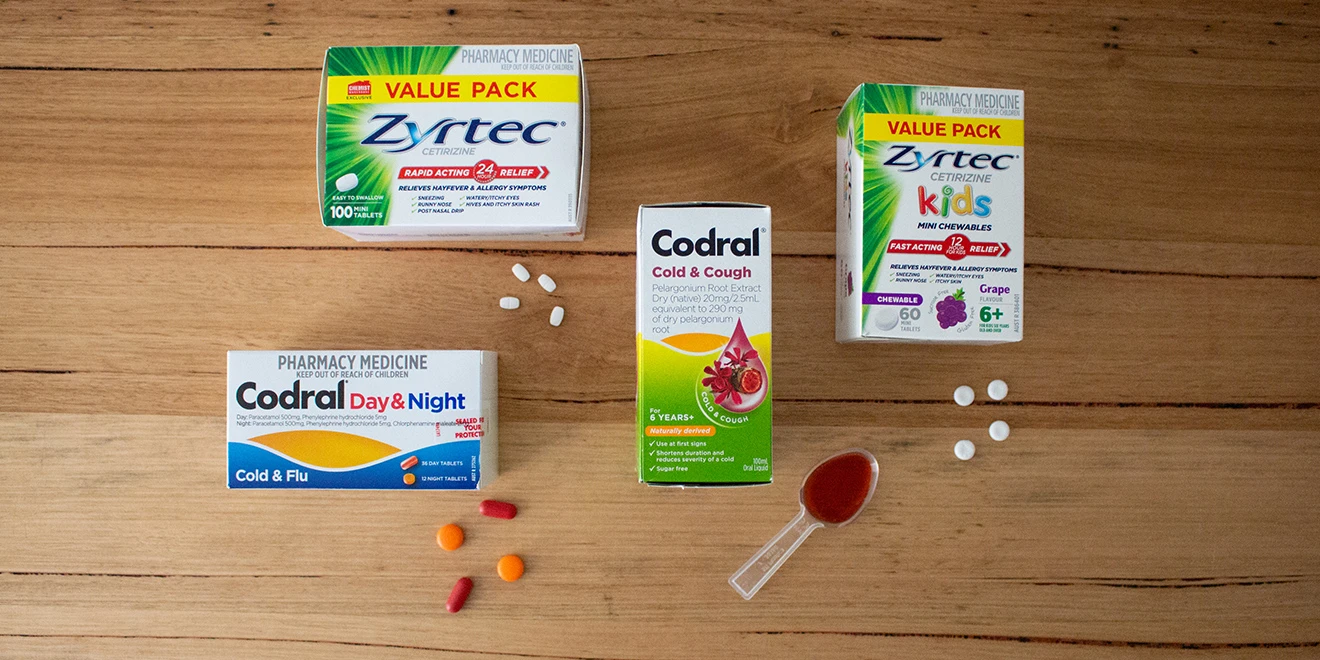
You know the drill. A runny nose turns into a late night Google spiral. But instead of scrolling through conflicting advice, we’ve pulled together what you need to know with help from Codral and Zyrtec. Colds and allergies often look alike, but they behave differently – and choosing the right treatment depends on spotting the difference. Let’s break it all down: what symptoms to look for, how long they usually last, and which products can help you (and your family) bounce back faster.
Cold vs allergy: What’s the difference?
Cold symptoms tend to:
Develop gradually over a few days
Last around 3–10 days
May come with fatigue, a sore throat or mild fever
Can include sneezing, and coughing
May make your whole body feel a bit run down
Allergy symptoms usually:
Start suddenly, often after exposure to a trigger (like pollen or dust)
Can include hives
Stick around for weeks – or longer if untreated
Can include sneezing, a runny nose and itchy eyes
Don’t come with fever
Often return at the same time each year (hello, hay fever season)
All signs point to a cold?
We’ve all been there. Sniffles on the train, sneezes in the office and that creeping feeling that you're likely next in line for this winter's cold. When it hits you know it'll pass, of course, but what should you look out for? Colds can come with a mix of body-wide symptoms like fatigue, headaches, and fever. If you have a sore throat, are feeling fatigued and have a stuffy and runny nose, you’re likely dealing with a cold[1].
Add this to your medicine cabinet:
Codral Cold & Flu Day & Night Tablets – formulated for the temporary relief of cold and flu symptoms, including runny nose, congestion, headache, body aches, and fever. The day tablets help relieve your symptoms to power through your day, while the night tablets include an antihistamine to relieve symptoms and help you rest. Codral is Australia’s #1 cold and flu brand[2] for a reason – trusted by Aussies for fast, effective relief.
How long do cold symptoms last?
Most colds follow a predictable pattern – starting slow, peaking around day two or three, and tapering off by day seven to ten. It’s not fun, but at least there is an end in sight. Common symptoms like sore throat, congestion and fatigue tend to show up early and ease off after a few days, while coughs (both dry and chesty) often stick around the longest – sometimes even after you’re feeling better.
On average, cold symptoms last about eight days, with fatigue and cough often lingering beyond the worst of the illness[3]. If your symptoms come on gradually, have changed over time, and include full-body tiredness or a low grade fever, it’s more likely to be a cold than an allergy.
All signs point to allergies?
If you’ve got itchy eyes, a runny nose, and no other major symptoms – allergies might be to blame. Hay fever (allergic rhinitis) can strike year-round or be triggered seasonally, and symptoms often come on suddenly, when exposed to triggers like pollen, dust, or pet dander.
Add this to your medicine cabinet:
Zyrtec Rapid Acting Mini Tablets – provide fast-acting, 24-hour relief from hay fever and allergy symptoms. The small, easy-to-swallow tablets work quickly to help relieve sneezing, runny nose, itchy eyes, and more – so you can get on with your day.
How long do allergy symptoms last?
Unlike colds, which usually clear up in under 10 days, allergy symptoms can hang around for weeks – or even months – depending on your triggers. In Australia, different regions have different pollen seasons, and certain grasses, weeds, and plants release pollen over extended periods[4].
If your symptoms pop up at the same time each year, or linger long after everyone else’s cold has cleared, there’s a good chance allergies are to blame. Keeping track of when and where symptoms strike – and whether they’re linked to time outdoors, dust, or pets – can help pinpoint what’s really going on.
Cold vs allergy in kids: What parents need to know
Runny noses, itchy eyes, crankiness – colds and allergies love causing chaos in kids’ routines. Colds typically pass within a week, but in the meantime they can leave kids feeling tired, congested and cranky – often needing time off school and plenty of rest and fluids.
Allergies, on the other hand, can stick around much longer. And unlike a cold, they don’t come with a fever. Instead, you might notice sneezing, a runny nose, itchy eyes that don't seem to go away. Symptoms often appear at the same time each year, or flare up around things like dust, pets or changes in the weather. Keeping track of when and where symptoms show up can help you spot potential triggers – and whether it’s time to explore allergy support[4].
For a cold try:
Codral Cold and Cough Pelargonium Root – a liquid formula that helps relieve cold symptoms fast. Suitable for kids aged six and up.
For allergies try:
Zyrtec Kids Chewables – fast-acting relief that lasts up to 12 hours. These easy-to-chew tablets are suitable for kids aged six and up, and can be taken on the go – no water needed.
Clear signs, clearer action
Whether you’re dealing with a cold or allergies, getting the right treatment depends on identifying your symptoms correctly. From congestion and sneezing to fatigue and aches, identifying the right symptoms means you can reach for the right relief – whether that’s Zyrtec for hay fever or Codral for cold and flu symptoms. When in doubt? Speak to a pharmacist or healthcare professional to help find the best option for you (or your little one). Shop the range online or in-store at Chemist Warehouse.
References
1. Healthdirect Australia. Colds – symptoms, causes and treatment.
2. Client calculation based on data reported by NIQ through ScanTrack Service for the Cold and Flu (multi-symptom) category for the 52-week period ending date for the T. Australia Grocery and Pharmacy channel, according to Client defined product hierarchy. Copyright © 2025, Nielsen Consumer LLC.
3. Codral Australia. Cold and flu symptoms.
4. Zyrtec Australia. Signs of allergies in children.
—
Article content disclaimer: Always read the label and follow the directions for use. Sponsored content in partnership with Kenvue, CODRAL® Australia and Zyrtec Australia.
Enjoyed this? You'll love these...

Beauty • Health
10 Aug '26
Father’s Day Gifts Made Easy: Our Top Picks for Every Dad
Read more
4 min

Beauty • Health
14 July '25
Head to Toe Support for Sensitive Skin – Powered by Oats
Read more
5 min

Health • Wellness
11 Aug '25
Smart Health on a Budget: Affordable Ways to Support Your Family's Wellbeing
Read more
5 min

Wellness
4 Aug '25
From Scroll to Snooze: A Routine That Supports Your Sleep
Read more
4 min